
Ritual Grove
An offline-first habit tracker where daily rituals grow into a calm 3D grove. Built to make consistency visible, motivating, and less stressful.
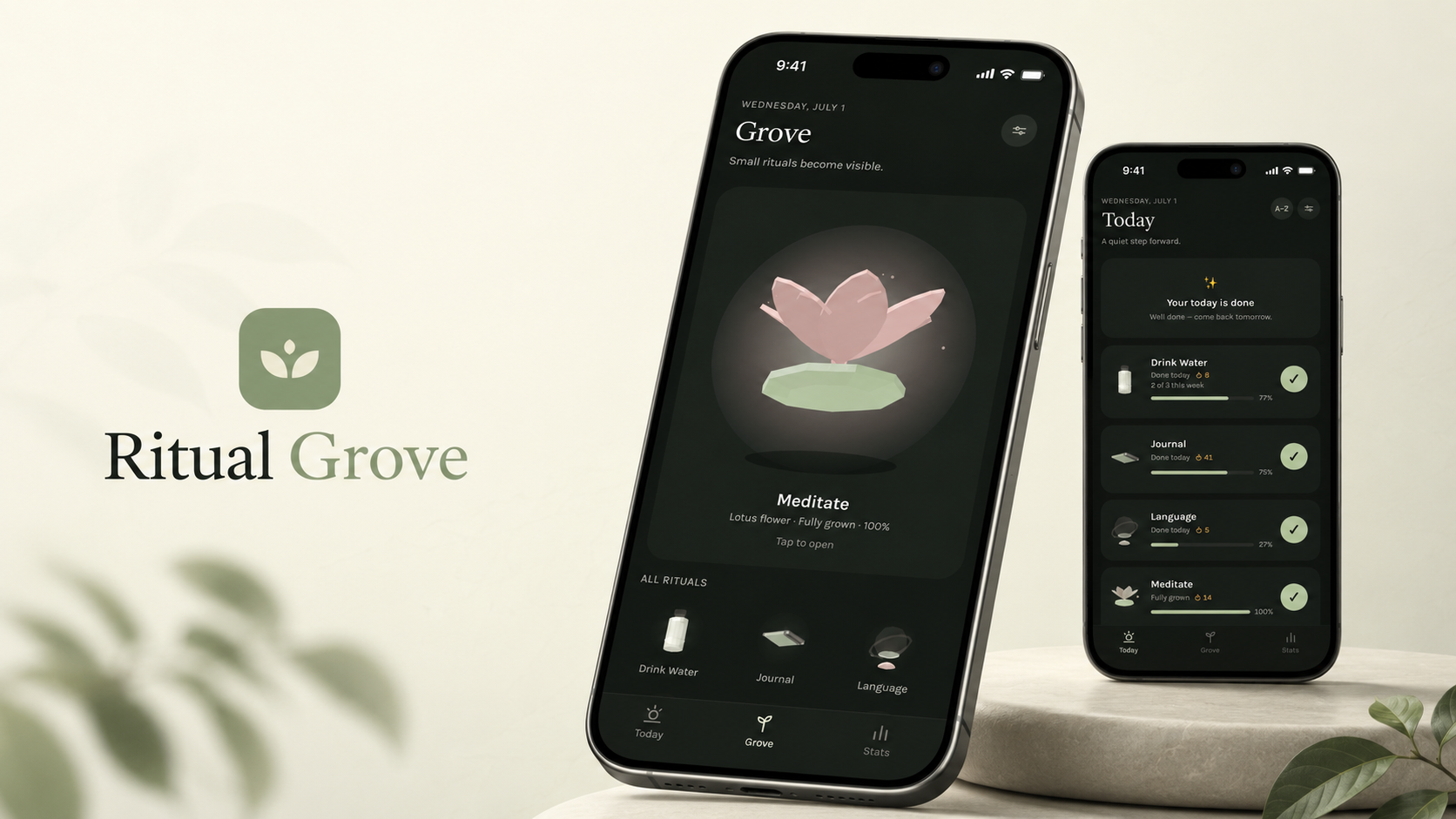
A mobile habit tracker where every completed ritual helps grow a personal 3D grove.
Overview
Ritual Grove is a mobile habit tracker built around a simple idea: habits are easier to maintain when progress is visible, calm, and rewarding. Instead of aggressive streak counters that punish a single missed day, Ritual Grove focuses on gentle progress, visual growth, and a peaceful sense of ownership. Users track rituals, complete them, and gradually build a grove of low-poly 3D objects.
This is a real product, built iOS first with Android planned later, and designed to be genuinely useful for free users. An optional premium upgrade exists mainly to unlock more visual content and to support future development.
The Problem
Many people want to follow healthy habits, but staying consistent is hard when the habits only exist in your head. If they are not written down somewhere, they disappear into the noise of daily life.
Habit tracking should not feel like another stressful obligation. It should feel like a calm visual reminder of what you are trying to become, not a scoreboard that punishes you for being human.
Inspiration
I have wanted to follow habits for a long time because I knew it was healthy and important, but I also knew from experience that it is difficult to keep track of habits without writing them down.
Reading Atomic Habits by James Clear a long time ago stayed with me. The core idea that small repeated actions compound over time influenced how I think about personal growth. Ritual Grove is my attempt to turn that idea into a simple mobile experience, not an official adaptation of the book.
Origin Story
For a long time, Ritual Grove was only an idea. I wanted to build a habit tracker, but there was never enough time to fully explore it.
That changed when I suddenly had access to Claude Fable before it was suspended. Habit tracking felt like the simplest useful app idea to test what AI-assisted development could really do.
I started with one prompt. The first version was rough, but surprisingly functional. It had a few objects, basic tracking, and many issues. Still, it showed enough potential to make me realize the idea could become a real app.
A second prompt did not work out because access was interrupted after the suspension. From there, the project became less about one magical prompt and more about real iteration: fixing bugs, redesigning flows, improving the product logic, cleaning up the UX, testing purchases, preparing screenshots, and turning the rough prototype into a finished product.
AI did not build the app by itself. It accelerated the first prototype. The real work was product thinking, debugging, UX decisions, monetization choices, testing, App Store setup, and polishing everything into something worth shipping. This is a story about using AI as leverage, not a replacement for engineering judgment.
Product Idea
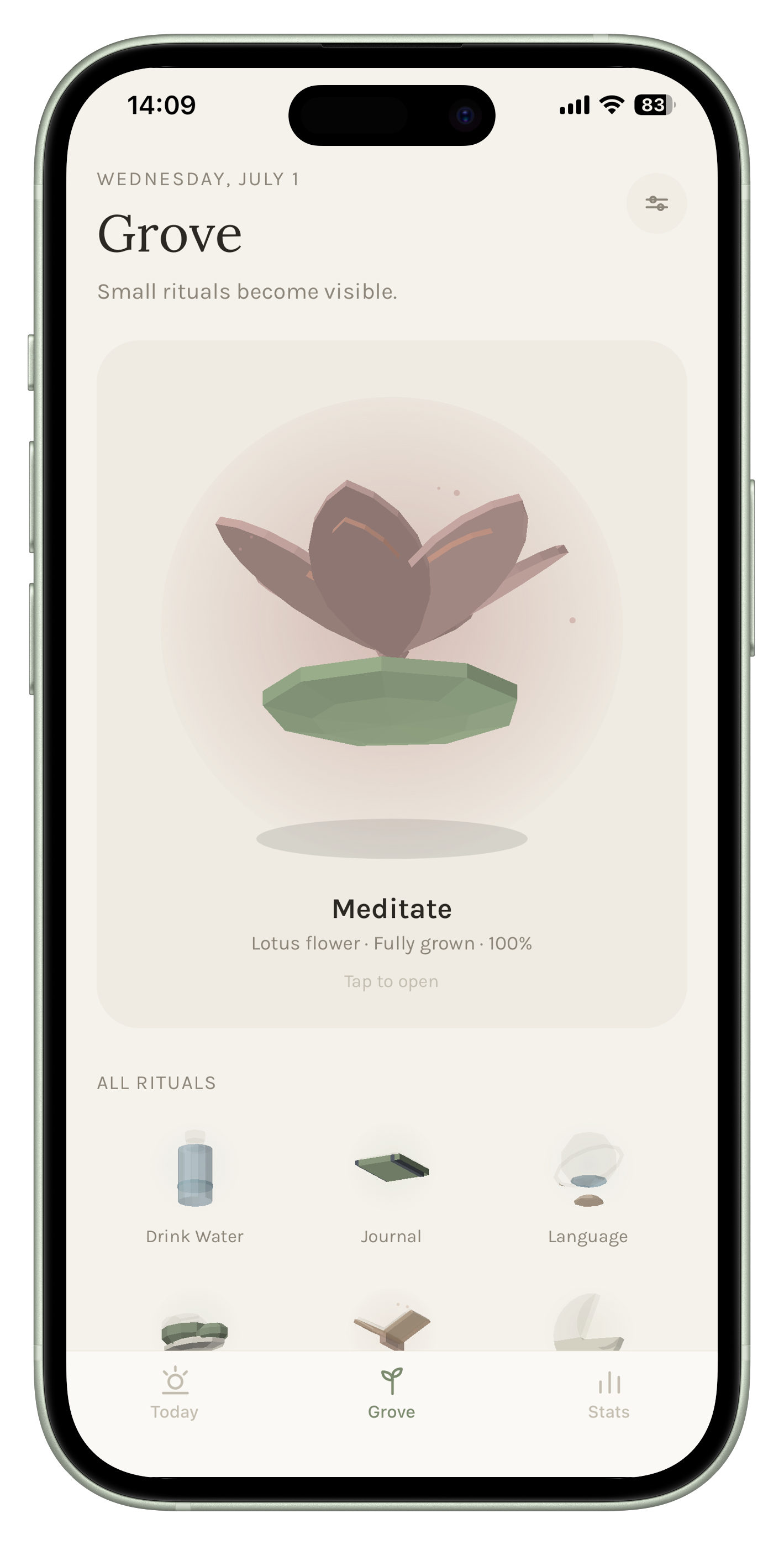
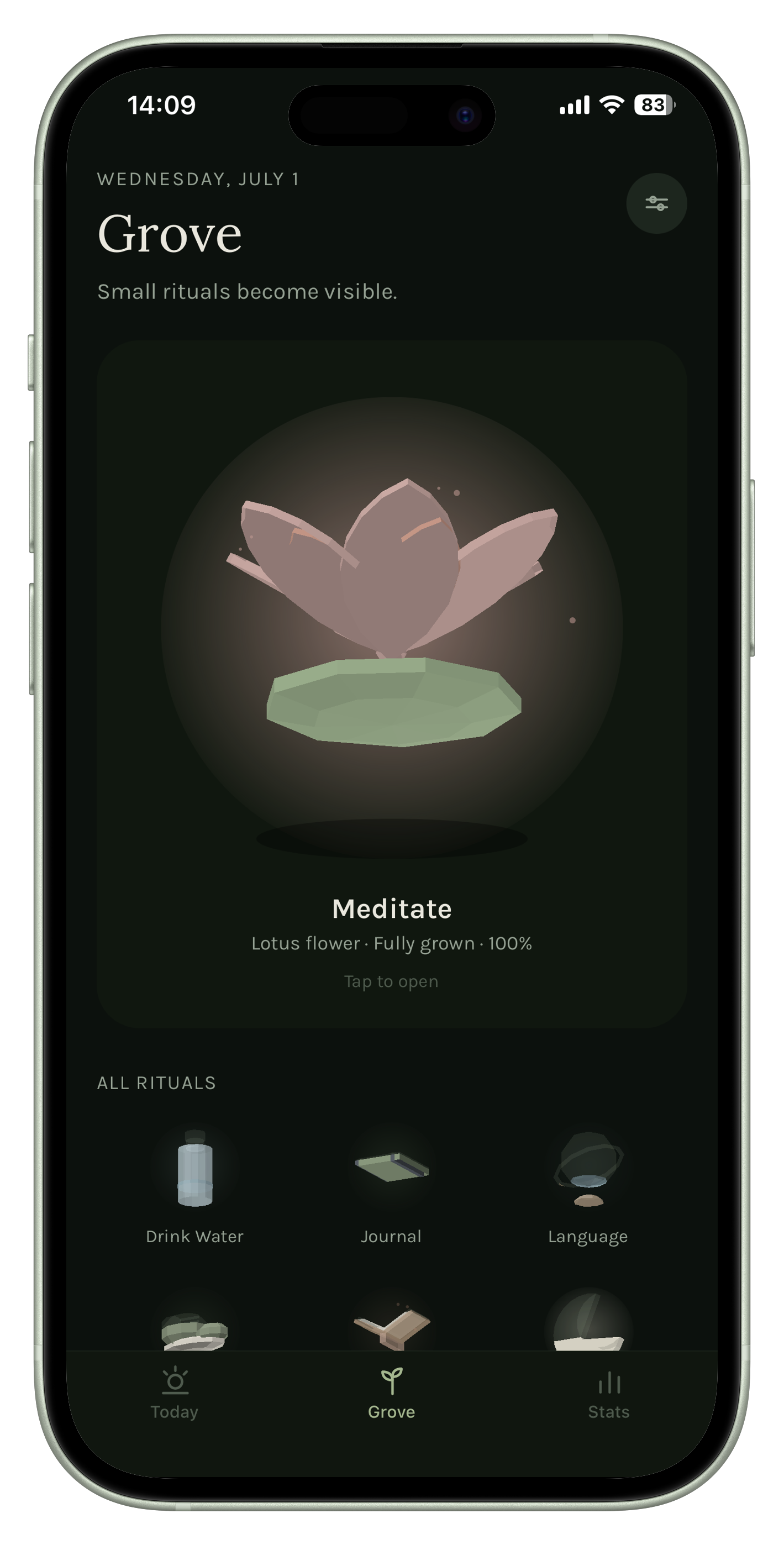
Instead of treating habits as checkboxes only, Ritual Grove turns progress into a small visual world. Every ritual can be represented by a clean 3D object, and completing habits gives a sense of growth and progression.
The business idea came directly from that visual system: users should be able to follow their goals for free, while premium offers more polished objects and additional visual variety. This makes premium feel like support for the product rather than a hard limitation on basic habit tracking. Free users can still track habits fully. Premium is optional, and it helps support future updates, new objects, and other independent apps, without promising a specific set of future features.
Design Direction
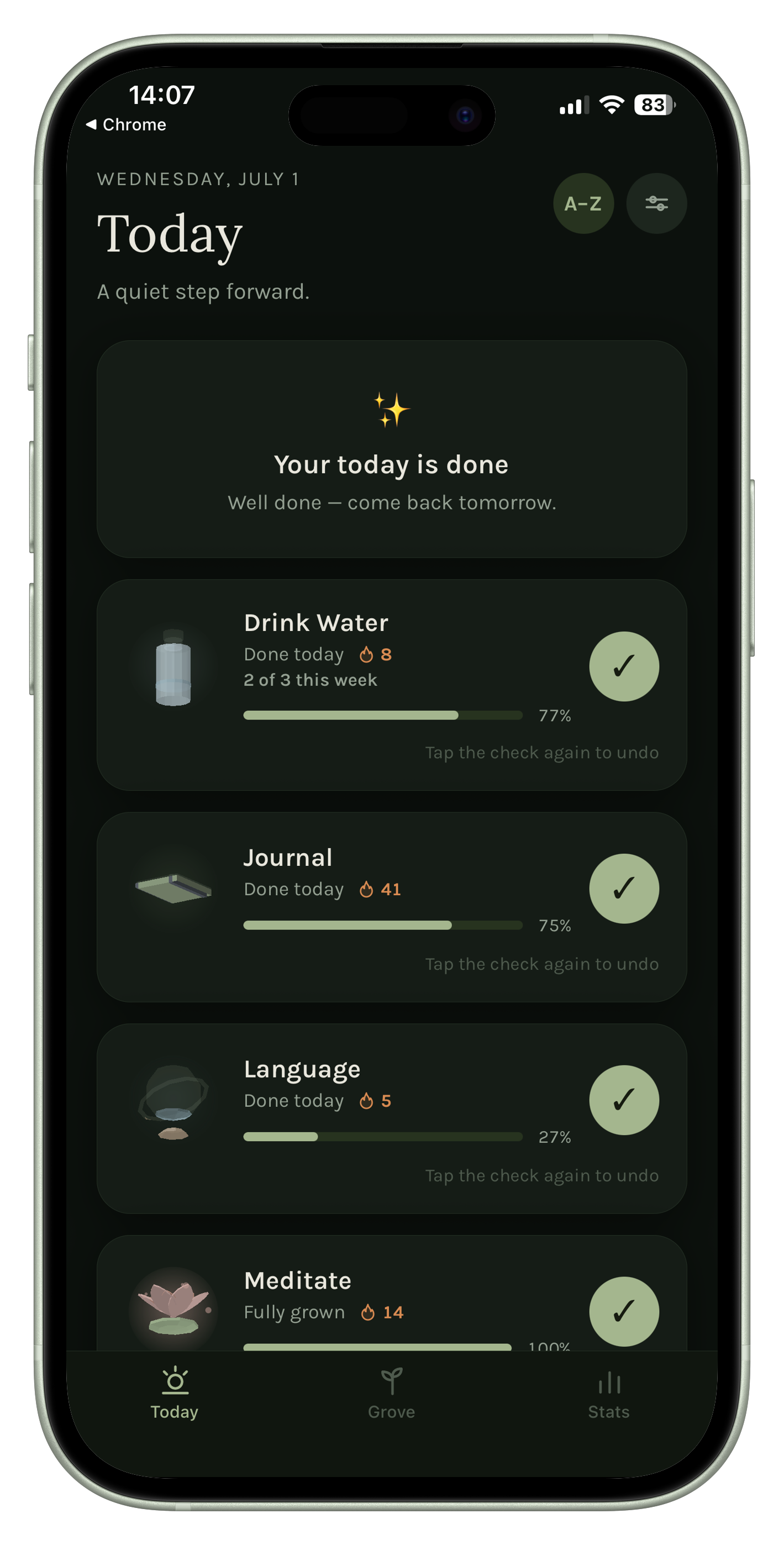
Ritual Grove is designed to be calm and minimal, built around low-poly 3D objects, clean visual hierarchy, and soft motivation. The goal is less guilt and more growth: habit tracking as a peaceful ritual rather than a source of pressure. The app deliberately avoids making productivity feel aggressive, aiming instead to create a small personal space that encourages consistency.
Key Features
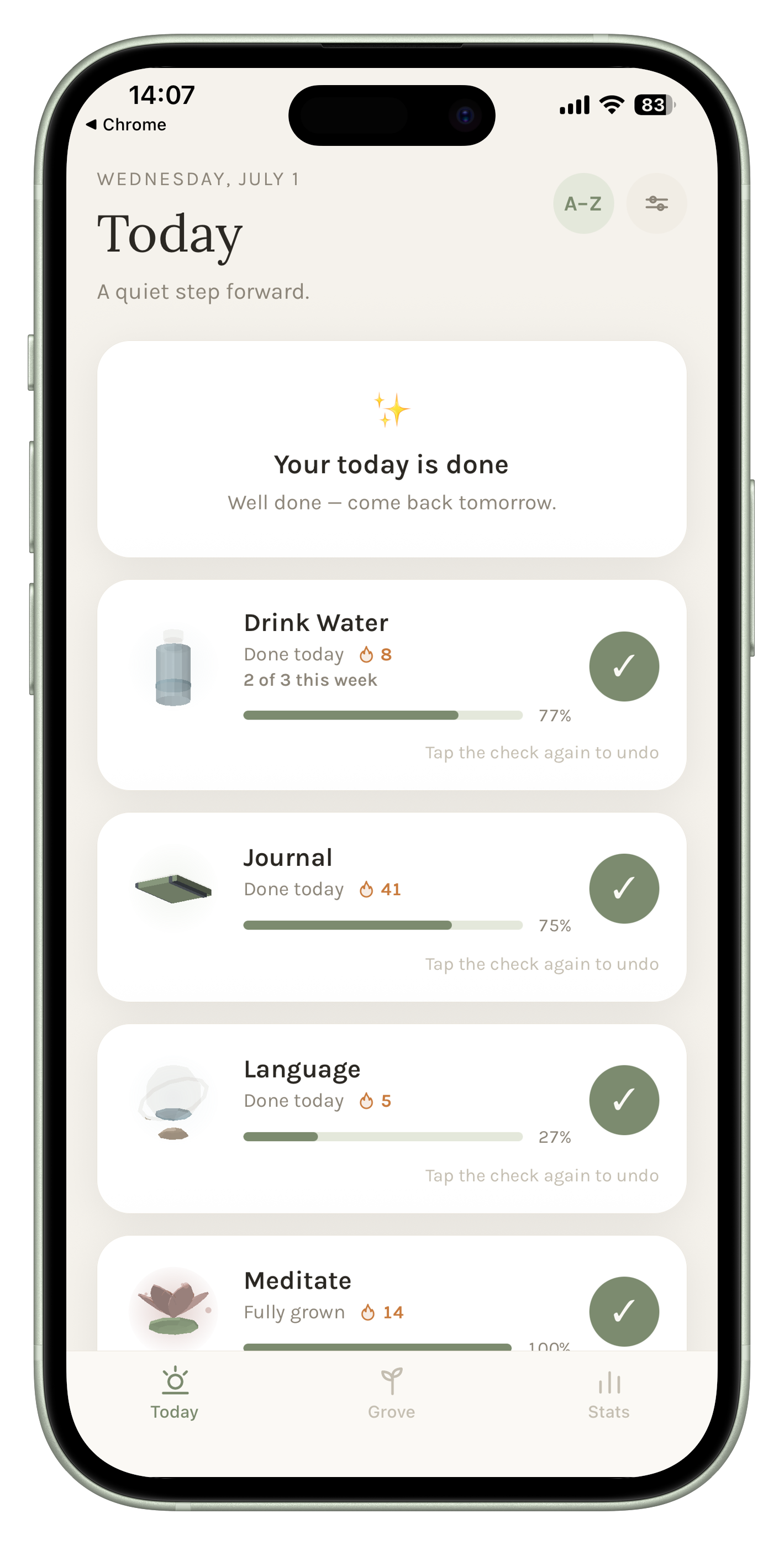
- Today View: See and complete the rituals planned for the day.
- Grove View: Watch completed habits contribute to a growing visual collection.
- Stats View: Review progress and consistency over time.
- Custom Rituals: Create habits that match personal goals.
- Visual Progress: Turn abstract discipline into something visible.
- Offline-first: Works without accounts or a backend.
- Premium Objects: Optional upgrade for users who want more visual variety and want to support the app.
Technical Implementation
Ritual Grove is built with React Native and Expo for cross-platform mobile development, with TypeScript for safer app logic. Premium purchases run through RevenueCat, integrated alongside App Store Connect setup, TestFlight distribution, and in-app purchase testing. Privacy and support pages, App Store screenshots, and metadata were all prepared as part of the release process.
The app is offline-first by design, with no unnecessary backend complexity. Shipping a real mobile app takes far more than building the UI. It took getting every one of these pieces right at once.
What I Learned
- AI can create momentum, but it does not remove the need for product judgment.
- A rough prototype is easy compared to making a product genuinely ready to ship.
- Getting a mobile app out involves many non-code details: privacy, screenshots, purchases, metadata, compliance, and support pages.
- Monetization has to be designed carefully so free users still receive real value.
- Simple apps are not necessarily easy apps. The simplicity has to be designed.
Links
Support Ritual Grove
Ritual Grove is free to start because I wanted the basic habit-tracking experience to be accessible. The optional premium version unlocks additional visual content and helps support future updates, maintenance, and the development of my other independent applications.
Engineering concepts used
Building an Offline-First React Native App
A practical architecture for React Native apps that remain useful without a connection: local source of truth, migrations, sync queues, conflicts, and honest failure handling.
React Native Performance Visualized: JS Work, Rendering & Dropped Frames
See how JavaScript, React rendering, native/UI work, lists, images, and state updates compete for a frame—and which optimizations actually help.
RevenueCat + Expo: Subscriptions, Lifetime Purchases, and Restore
How to add in-app purchases to an Expo app with RevenueCat: entitlements over product IDs, why restore is mandatory, and why the client is the wrong place to trust a purchase.
How to Ship a React Native Expo App to the App Store with EAS
The full path from a working Expo project to an approved App Store release: build profiles, credentials, versioning, TestFlight, and the review rejections that are easiest to avoid.
Key Highlights
- •Designed and built a full mobile product from prototype to release-ready app
- •Built an offline-first React Native/Expo app with no unnecessary backend complexity
- •Integrated RevenueCat for a free-to-start, optional one-time premium model
- •Prepared App Store Connect metadata, screenshots, privacy, and support pages