Building Ritual Grove: From One Prompt to a Finished Habit Tracker
How a rough AI-assisted prototype became a real mobile habit tracker built with React Native and Expo.
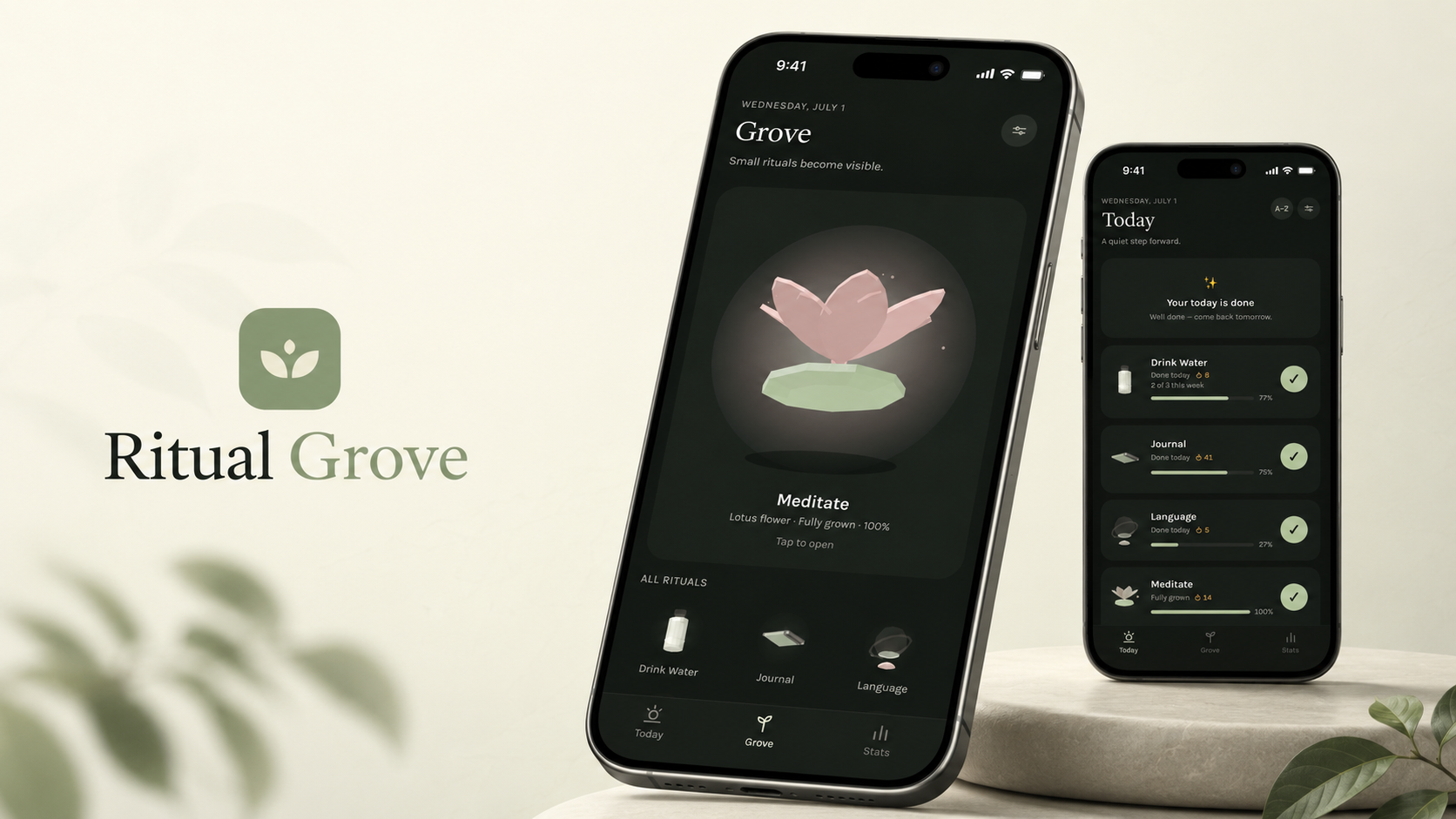
I have always liked the idea of following habits. I knew it was healthy, and I knew consistency matters. But like many people, I also knew that habits are easy to lose when they only exist in your head.
If a habit is not written down somewhere, it slowly disappears into everything else happening during the day.
Atomic Habits Inspiration
Years ago, reading Atomic Habits by James Clear made the idea stick with me. Small actions, repeated consistently, can compound into something meaningful. But knowing that is not the same as living it.
Ritual Grove started from the gap between understanding habits and actually tracking them. This is personal inspiration, not an endorsement or affiliation with the book or its author.
The Unexpected Start
I did not start with a full business plan or a perfect product strategy. I started because I had a rare window of time and sudden access to Claude Fable before it got suspended.
I wanted to test what AI-assisted development could do on a real app idea. A habit tracker seemed like the simplest useful product to try.
The first prompt gave me a rough but surprisingly promising version. It had a few 3D objects, some basic tracking logic, and many issues. But it was enough to make the idea feel real.
When the Easy Part Ended
The second prompt failed because access was interrupted. That forced the project into a more realistic phase.
From that point, it became a week of experimenting, fixing, rebuilding, and making decisions:
- Which features should be free?
- How should premium work without making the app feel limited?
- How should habit progress feel calm rather than stressful?
- How should the app explain itself in the App Store?
- How do purchases work correctly through RevenueCat?
- What does Apple require for review?
- How do I make the app feel like a finished product instead of a prototype?
Product Thinking
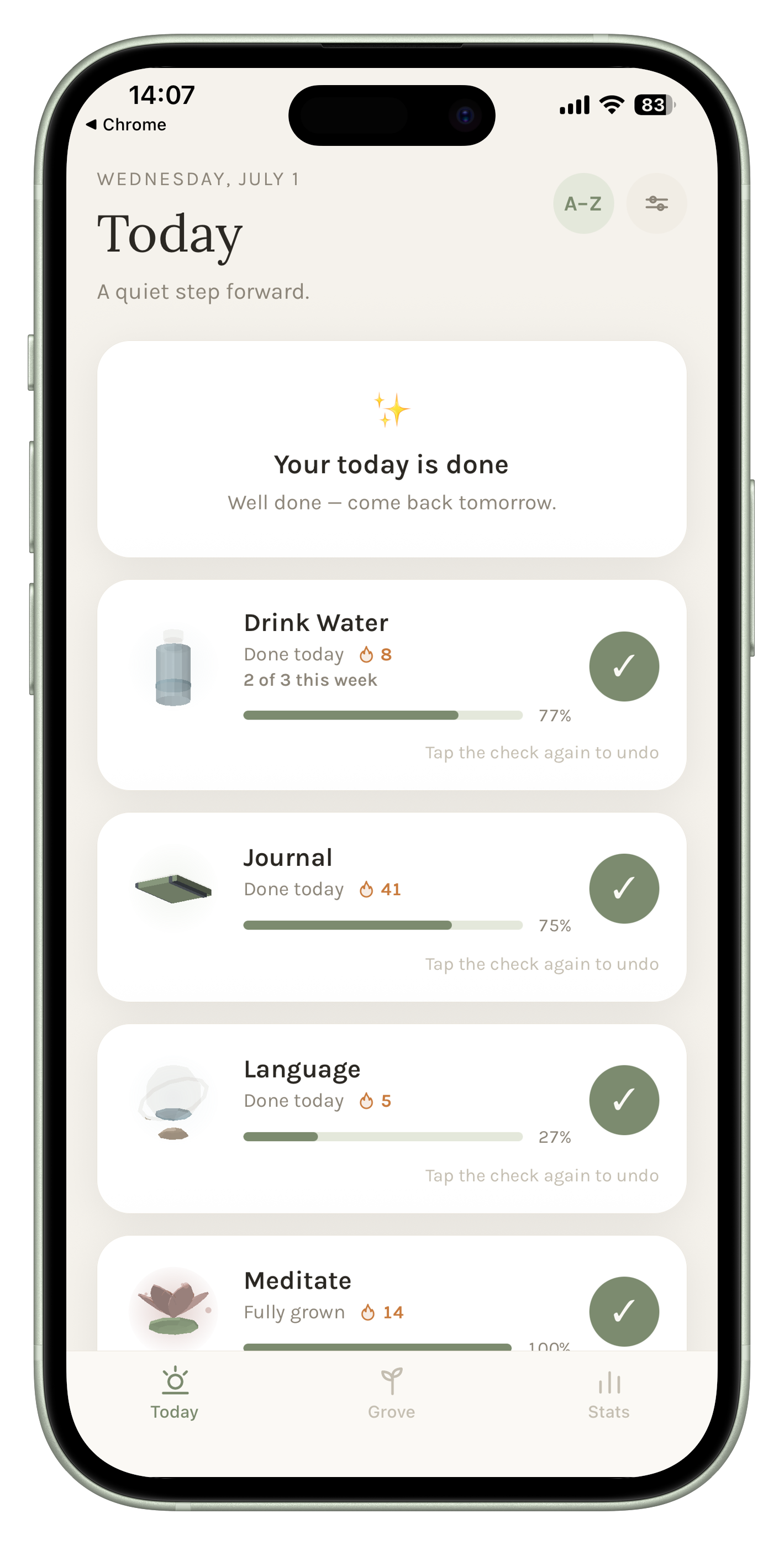
The main product insight was that the app should not only track habits. It should make consistency visible.
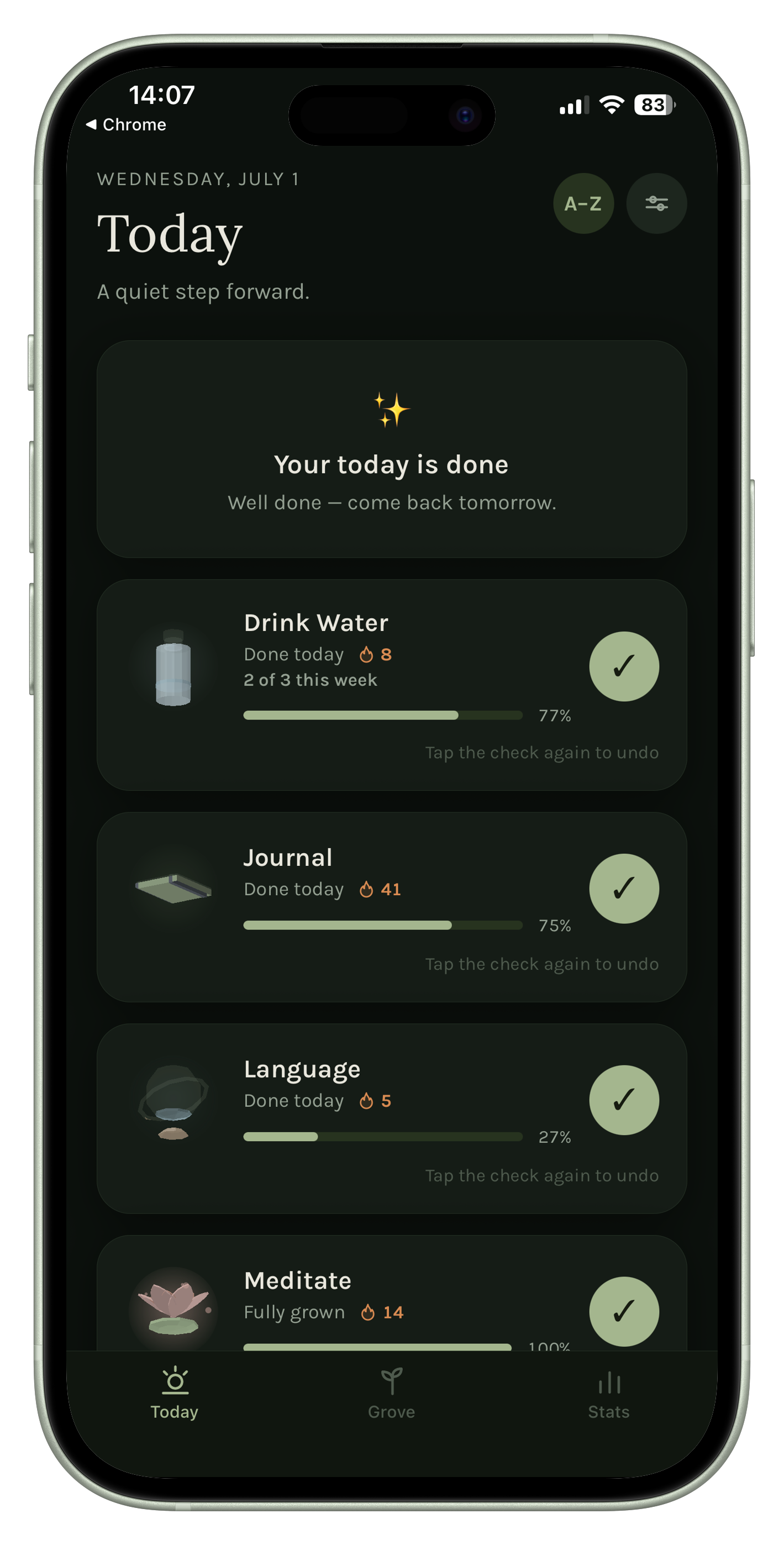
That is where the 3D grove idea became important. Clean 3D objects gave the app a stronger identity and made progress feel collectible, visual, and personal.
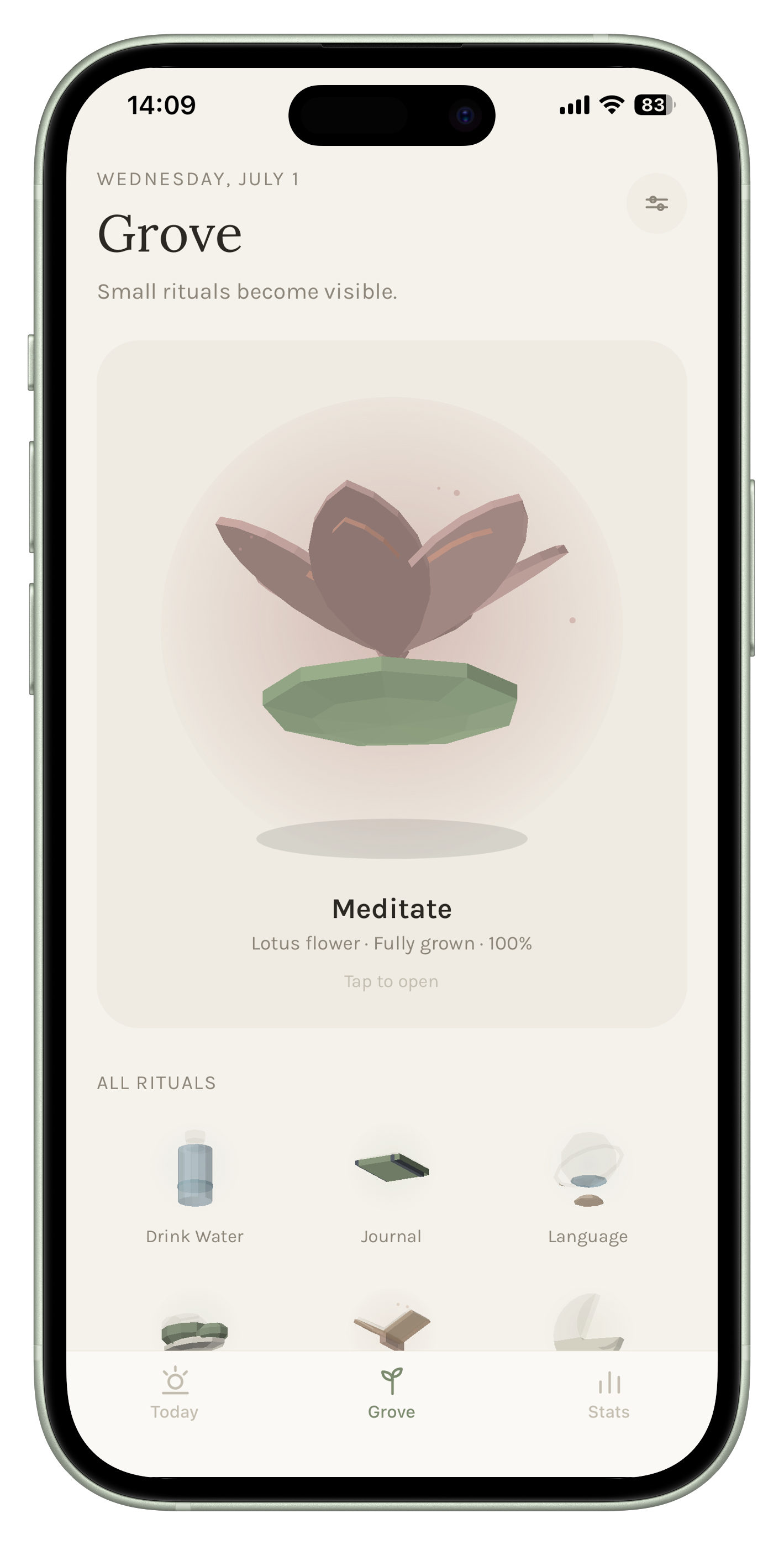
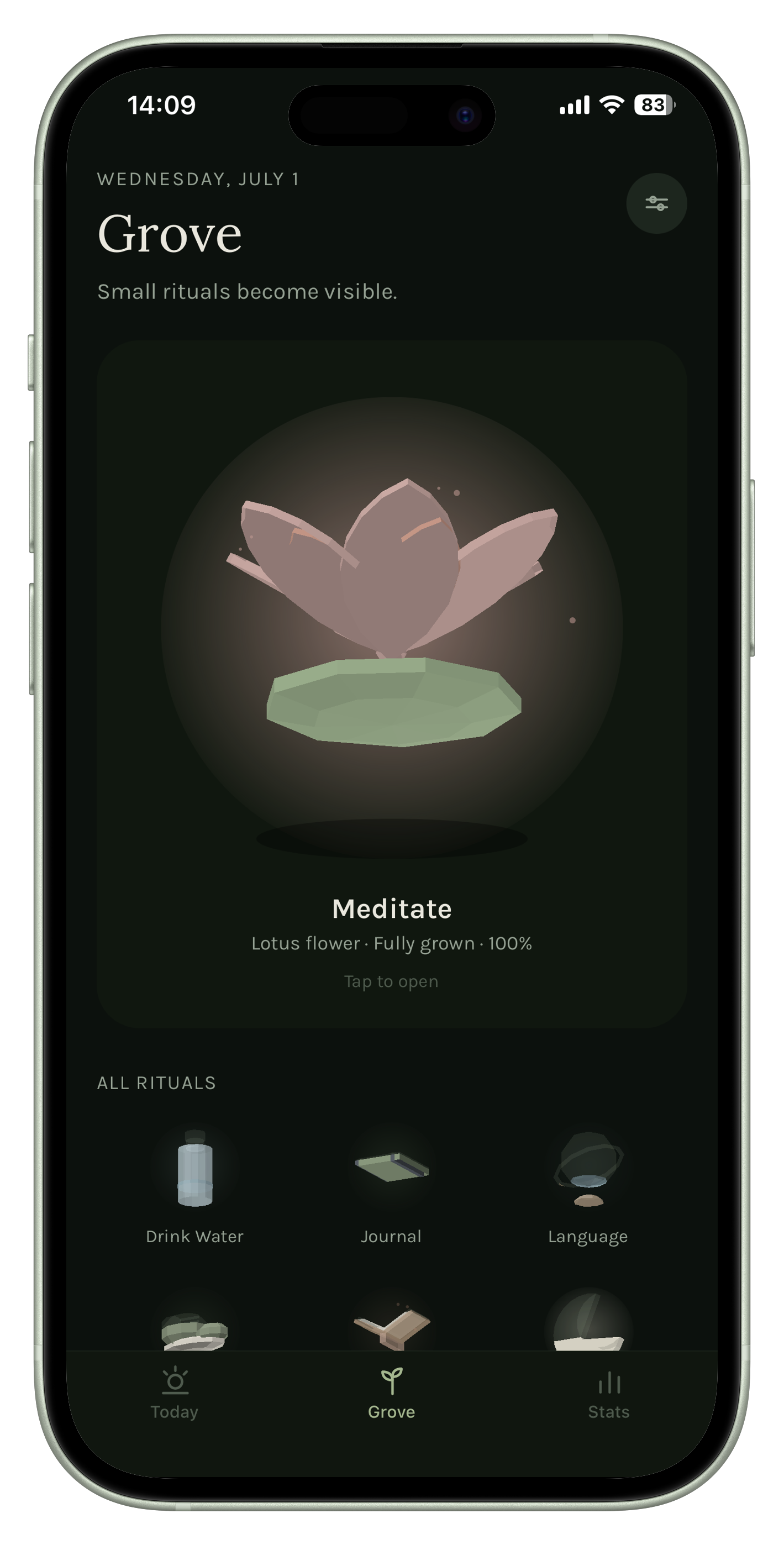
Instead of only chasing numbers, users can build toward something. A completed habit is not just a checkmark. It becomes part of a growing space.
Free vs Premium Philosophy
I wanted the app to allow real habit tracking for free. The premium version should not block the core idea. Instead, it should offer more visual variety and give users a way to support the project.
Premium helps support future updates, more visual content, maintenance, and my other independent applications and projects. I have deliberately avoided promising specific future features tied to it.
AI-Assisted Development, Reflected On
AI helped create the initial momentum, but the final app required many human decisions. The difficult part was not only generating code. It was deciding what the app should be, what it should not be, how it should feel, what to remove, what to simplify, and how to prepare it for an actual release.
AI was a tool. The product judgment, the iteration, and the final shipping responsibility were mine.
Getting Ready to Ship
Turning the prototype into an app worth shipping meant closing every remaining gap: purchase flows tested end to end, privacy and support pages in place, screenshots and store metadata written, and every rough edge from the original prototype smoothed out. That is the point where a side project stops being an experiment and starts being a real product.
Closing
Ritual Grove started as one prompt and a simple idea, but it became a real product through iteration. It reminded me that small repeated actions matter not only for habits, but also for building software.
A rough prototype became a finished app because I kept improving it one step at a time.
If you try Ritual Grove and find it useful, the optional premium version is the best way to support future updates, maintenance, and my other independent projects.
Where to Get It
Ritual Grove is available on the App Store. A Google Play release is planned for later.
- App Store
- Google Play: Planned, link coming soon
- Privacy Policy
- Support